
Enquiry
+91-7945023371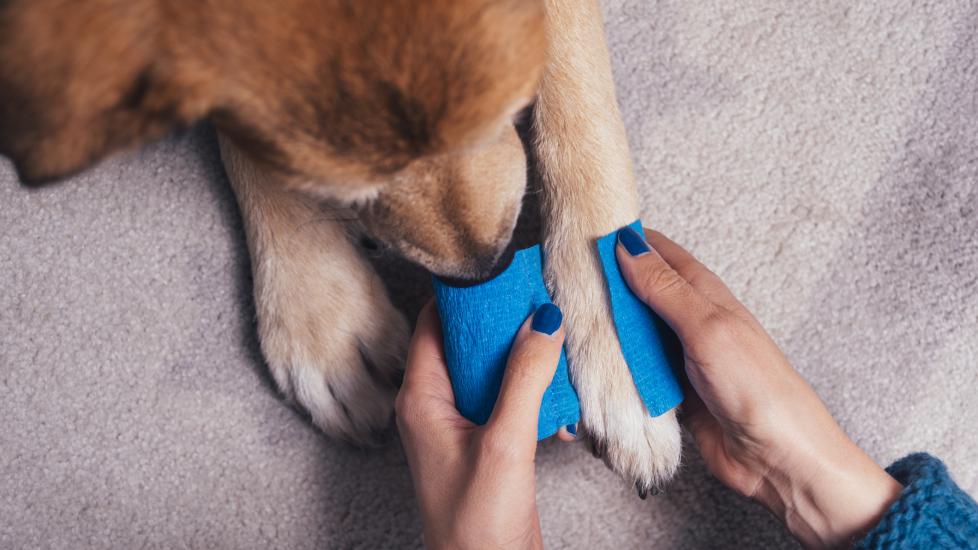
Lacerations, scrapes, punctures, burns, bites, bruises, and surgical incisions—these are just a few of the types of dog wounds your canine companion might experience in their lifetime.
While you should always seek veterinary attention for a major dog injury, dog wound care at home is possible for minor injuries. And preparation is key for giving your dog the care they’ll need.
A dog wound is any injury to a dog’s body. Major dog wounds include an open fracture, a large laceration, and any wound that is cause for concern. If you notice wounds in the mouth, are concerned about internal damage, or the wound is more than a minor cut or scrape, seek veterinary attention immediately.
In this article, we’ll focus on wounds that involve a break in the dog’s skin, and specifically on how to manage simple dog wounds such as scratches, abrasions, or small cuts.
We recommend having a dog first-aid kit prepared for when accidents happen. Dog wound care items you should have in the kit include:
Use a pet-safe wound spray to help flush and decontaminate the wound.
You can use these pet-safe wipes to help clean minor skin injuries. These wipes help prevent bacterial and fungal infection.
Medical-grade honey ointments have strong antibacterial properties that may help your pet’s wound heal.
An enzymatic cream with hydrocortisone aids in the treatment of inflammatory pet wounds such as hot spots. This will reduce itching and inflammation.
Applying this powder to minor cuts or broken nails will help stop bleeding. This is especially helpful if you accidentally snip your dog’s nail too short and cut into the quick (the sensitive flesh beneath the nail). Benzocaine, included in this product, is a topical anesthetic. It reduces pain and itchiness by helping to numb the area.
Once cleaned, gauze pads can be applied over the dog wound to help keep it clean as it heals.
Bandage scissors are useful for cutting bandages into an appropriate size, as well as removing the bandage without cutting your pet.
It’s important that your hands stay clean while you are taking care of your pet. Rubber or latex gloves also protect your pet from debris or contaminants on your hands.
Fur should be shaved away from around the wound, using dog safe clippers, to help keep the area clean. This will also help with adherence of the bandage.
For wounds on the limbs, this vet wrap bandage should be the outer layer, offering additional stability and safeguarding against further injury or contamination.
It’s common for dogs to try to lick at wounds and bandages. Therefore, it’s a good idea to always have a recovery cone handy, especially if you can’t get to a vet right away for a skin issue.
Follow these steps to treat and clean your dog’s wound at home:
If you’re questioning whether the wound is deep enough to require stitches, contact your veterinarian immediately for guidance.
For unbandaged wounds, follow the same schedule for cleaning. If you note signs of infection or that the wound doesn’t appear to be healing, seek veterinary attention. If you need to cut the bandage, use the bandage scissors instead of normal scissors to avoid cutting your pet’s skin.
If your dog has a bandage around their leg for a wound you are monitoring at home with the advice of a veterinarian, be aware of the following signs that the bandage is too tight:
If you notice these signs, contact your veterinarian. If the wound requires veterinary attention, be sure to follow your veterinarian’s instructions carefully.
You should visit an emergency veterinarian if the dog wound is:
If you’re questioning whether the wound is deep enough to require stitches, contact your veterinarian immediately for guidance.
For the following types of wounds, we recommend discussing the injury with your vet before performing any at-home care:
Seek veterinary attention if your dog is unable to handle at-home wound care. This includes if they’re trying to bite you, yelping or growling, baring teeth, or constantly trying to escape your help. In situations like these, a veterinarian will be better suited to address your dog’s needs.
Content Credits: Rhiannon Koehler, DVM Veterinarian


 Emergency
